Begin with a device inventory, not a wattage headline. One well-matched multi-port charger, two clearly rated cables, and an airline-compliant power bank cover most routines without creating a pouch full of duplicates.
The actual products
Every item below is a real, current product researched from its official brand page. We name the fit and the limitation; we do not imply hands-on testing, brand approval, or an active affiliate relationship.
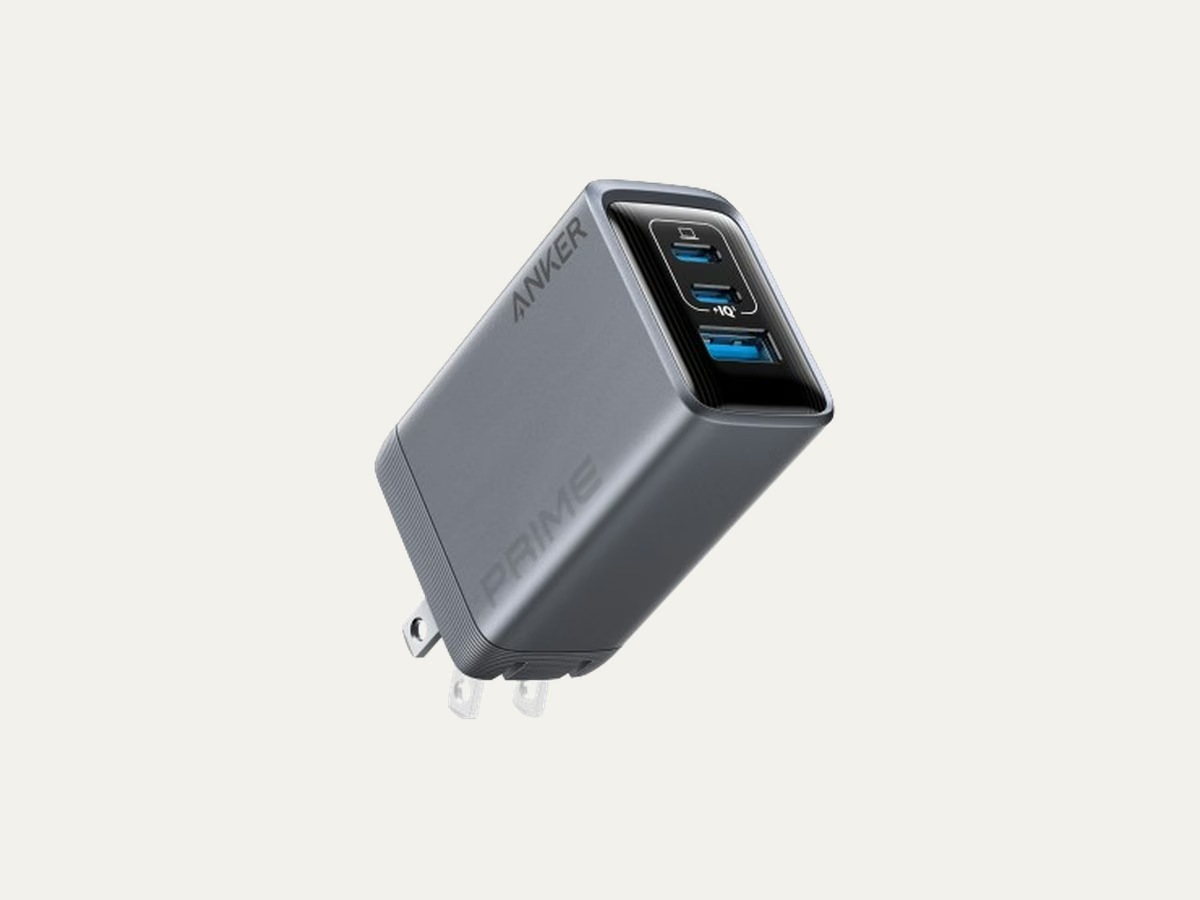
Prime Charger (100W, 3 Ports, GaN)
A specific three-port charger with two USB-C ports and one USB-A port, suitable as the single wall block in a mixed-device kit.
Verify before buying: Device wattage, regional plug, included cable, and output allocation when multiple ports are active.
View on Anker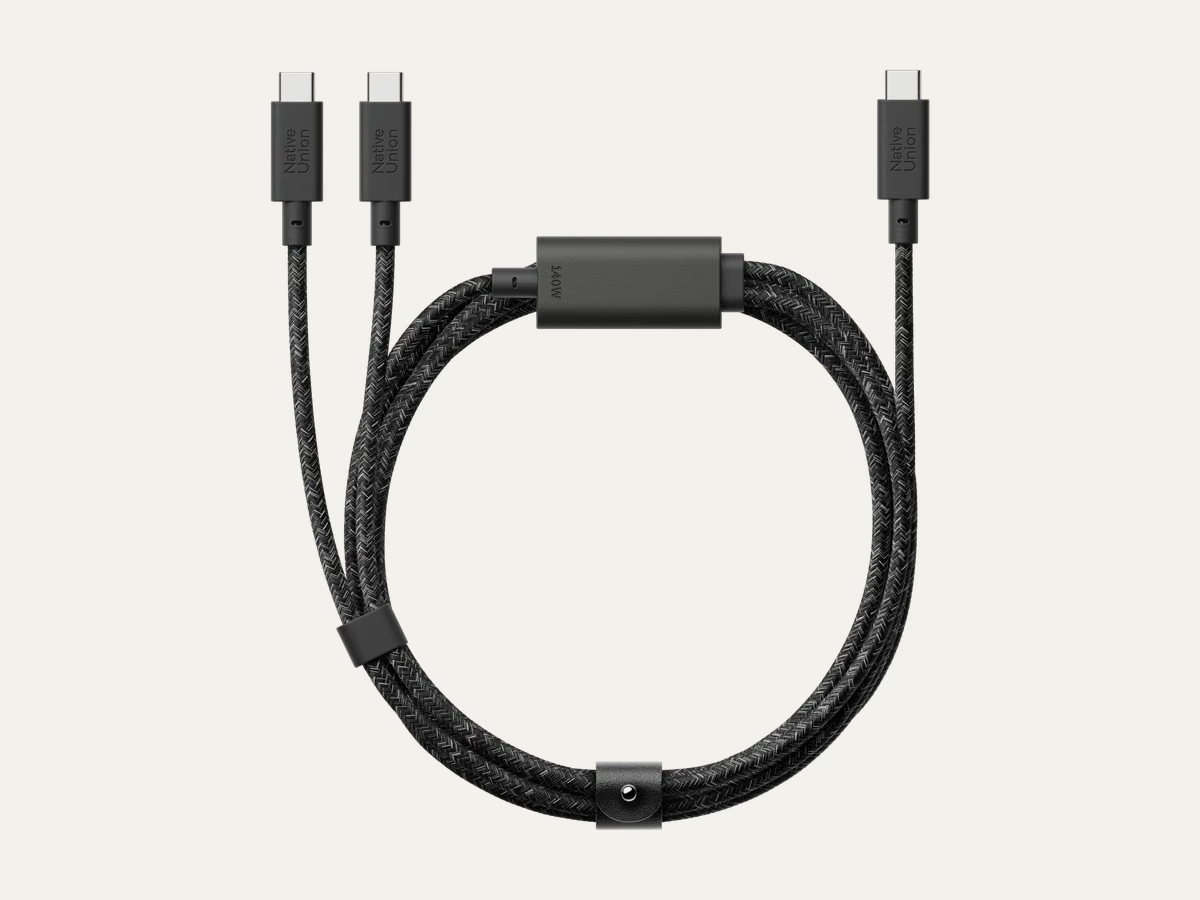
Belt Cable 2-in-1 USB-C (140W)
A 2-meter braided cable with two USB-C device connectors, designed to charge two devices from one power source.
Verify before buying: Your charger’s port output, how power divides between devices, 480 Mbps data limitation, and whether 2 meters is useful or excessive.
View on Native Union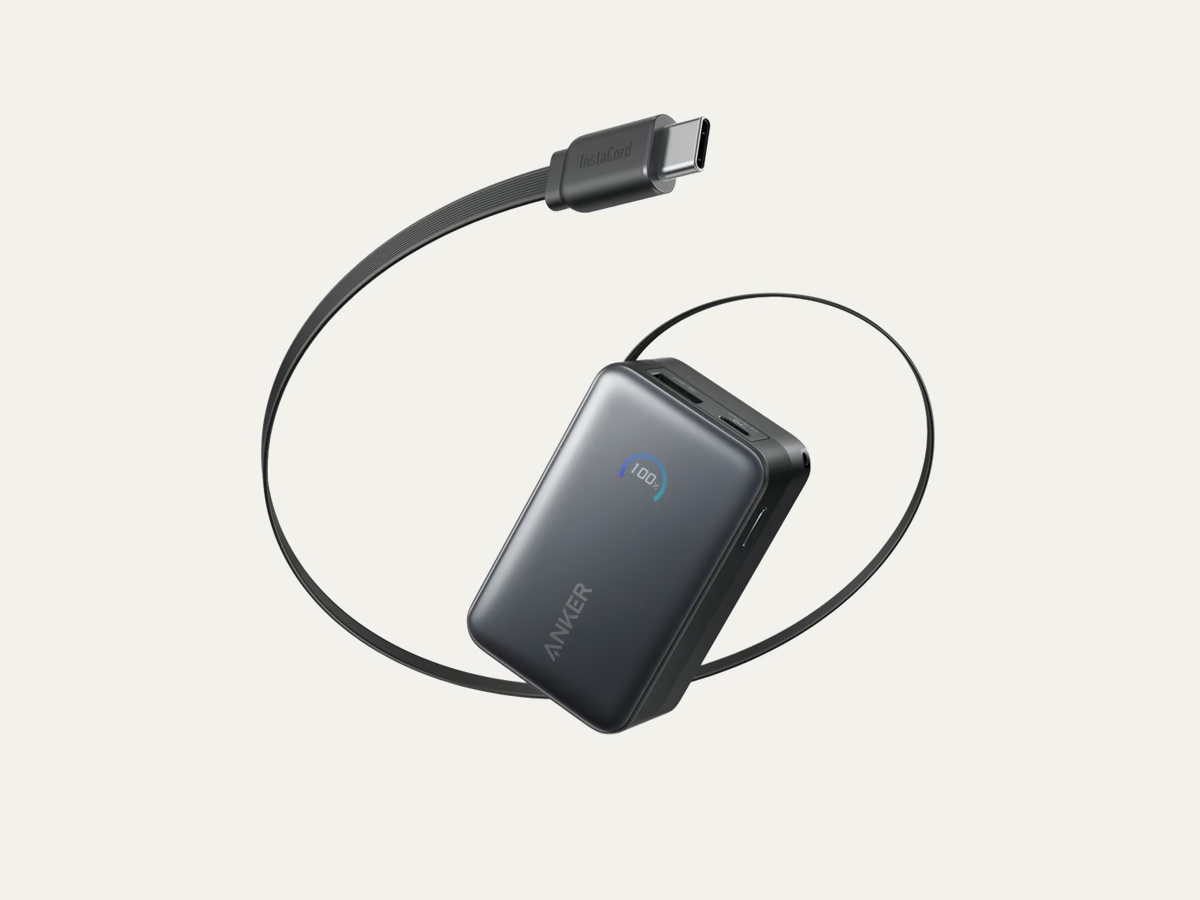
Nano Power Bank (10K, 45W, Retractable USB-C)
A compact 10,000mAh battery with a built-in retractable USB-C cable and a display for charging status.
Verify before buying: Connector fit through your phone case, real carrying weight, recharge time, battery condition, and current airline rules.
View on Anker
Tech Kit
A structured zip organizer with internal sections intended to keep cables and small devices visible.
Verify before buying: Packed dimensions, internal loop fit, closure pressure, and whether the organization adds more bulk than it saves.
View on BellroyThe editorial logic
These are the jobs each product should perform. Use the best-for and trade-off notes to decide whether the named recommendation fits your situation.
Anker Prime Charger (100W, 3 Ports, GaN)
The two USB-C ports and one USB-A port make this the hub of the kit, provided its shared-output modes match your laptop and phone.
- Best for
- One laptop plus a phone and small accessory
- Trade-off
- 100W is the total headline output, not a promise to every port at once
Native Union Belt Cable 2-in-1 (140W)
A long braided cable splits to charge two USB-C devices and includes its own cable management strap.
- Best for
- Travelers who value fewer loose cables
- Trade-off
- USB 2.0 data speed and split power make it a charging-first cable
Anker Nano Power Bank (10K, 45W)
A 10,000mAh battery with a built-in retractable USB-C cable reduces the chance of forgetting the one cable it needs.
- Best for
- Long transit days and USB-C phones
- Trade-off
- Built-in cables improve convenience but are not user-replaceable
Bellroy Tech Kit
The structured zip case keeps a charger, battery, and short cables visible instead of stacked at the bottom of a soft pouch.
- Best for
- People who move one complete kit between bags
- Trade-off
- The organizer adds bulk and costs more than a simple zip pouch
Make a device-and-port inventory
List every device that must charge during the same overnight window. Record its input port, cable standard, and realistic power requirement. A charger is only useful if its ports and shared output match that combination.
Keep legacy USB-A only when something in the kit still needs it. Otherwise, a USB-C-first setup reduces duplicate cables and makes future replacements easier.
- Record the highest-wattage device
- Count simultaneous charging needs
- Separate required legacy ports from just-in-case extras
Read the shared-output table
A charger labeled 65W or 100W does not necessarily deliver that amount to every port. Manufacturer documentation should show what happens when two or more devices connect.
Match cables to the required power and data role. A cable that charges a phone may not support a laptop’s full input or an external display, even when the connectors look identical.
- Check every multi-port combination you will use
- Look for a clear cable power rating
- Label special data or display cables
Treat batteries as travel equipment
Power banks introduce weight, heat, and airline restrictions. Check current carrier and airport guidance before flying, keep the rated capacity legible, and carry the battery in the cabin rather than checked luggage when required.
Capacity claims do not equal energy delivered to the device. Conversion losses, cable quality, charging speed, age, and temperature all affect the useful result.
- Verify current airline limits before each trip
- Inspect swelling, damage, and overheating
- Recheck actual need before choosing a larger battery
The final checklist
Every device has one compatible cable
The charger’s shared output covers the real overnight combination
Cable ratings match the highest-power device
The power bank fits current carrier rules
Every item has a visible place in the pouch
Commerce note
Product links currently go to official manufacturer pages and are not presented as active affiliate offers. Product imagery is sourced from those same official pages and used to identify the item being discussed. If a compensated merchant link is added, Findly will disclose it and recheck the destination, terms, availability, and fit.
Read our editorial standards